
Content marketing strategy: from planning to execution
Key takeaway
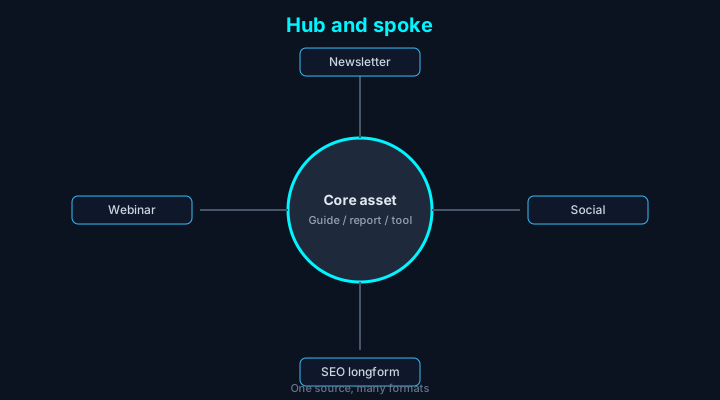
In one line: Place hub assets (guides, reports, tools) at the center and repurpose them per channel to keep message consistency and production efficiency.
| Asset type | Spoke examples |
|---|---|
| Long-form guide | Newsletter digest, Shorts, slide deck |
| Data report | Infographic, webinar Q&A |
Introduction: why content marketing matters
In 2025, audiences increasingly trust brands that teach more than brands that only advertise. Content marketing is not just product promotion—it is earning attention by delivering value and building durable trust. This article reflects how we run the itemSCV blog and newsletter: targeting, planning, distribution, and measurement from a practitioner angle.
1. Define target personas
Why it matters
Without a clear persona, content drifts. You need needs, pains, and behavior patterns grounded in evidence.
Checklist
- Demographics and psychographics: age range, role, interests?
- Top problems or jobs-to-be-done?
- Where do they search? (Google, YouTube, Instagram, LinkedIn, etc.)
- Preferred formats? (blog, video, infographic, newsletter)
- What does their purchase journey look like?
Examples
- Notion initially targeted “team leads who need project management,” publishing practical posts on collaboration and tool comparison.
- A hypothetical beauty brand might target “working women in their 20s–30s” with quick morning routines and office-friendly tips—content that fits real schedules.
Practical tips
- Interviews: 5–10 structured conversations to sharpen the persona.
- Analytics: Use web and social insights to validate behavior.
- Competitive content: Map what others publish and find whitespace.
2. Editorial planning and the calendar
Planning framework
A. Content funnel
- Awareness: Problem recognition and learning
- e.g. “Why project management breaks down,” “How effective teams collaborate”
- Consideration: Comparing options
- e.g. “Project management tools compared,” “How to choose collaboration software”
- Decision: Choosing and converting
- e.g. “Find the right tool for your team,” “Start a free trial”
B. Editorial calendar
Plan themes and publish dates monthly and weekly.
Checklist
- Mix of funnel stages across the month?
- Seasonality, campaigns, and trends reflected?
- Resourcing realistic (writers, design, legal)?
- Posting times tuned per channel?
Practical tips
- Calendar tool: Notion, Sheets, or a CMS calendar for visibility.
- Idea backlog: Capture ideas continuously; pull from it during planning.
- Repurpose: Turn a strong post into video, threads, slides, or a talk track.
3. Production and optimization
SEO-aware writing
A. Keyword research
- Use Google Keyword Planner, Search Console, and third-party tools to pick target phrases.
- Include long-tail queries (e.g. “project management tool comparison 2025”).
B. Structure
- Clear H1/H2/H3 hierarchy.
- Scannable lists, tables, and pull quotes.
- Internal links to related pieces.
Checklist
- Target keywords appear naturally in title, body, and meta description?
- Does the piece answer the reader’s question directly?
- Visuals support the narrative?
- CTAs are explicit?
Practical tips
- Templates: Reuse outlines for guides, comparisons, and case studies.
- Workflow: Draft → review → SEO pass → approval.
- A/B tests: Headlines and CTA copy on key landing pages.
4. Distribution and channel strategy
Channel-specific plays
A. Blog / website
- SEO for compounding organic traffic.
- Internal links to increase depth of engagement.
B. Social
- Instagram: Visuals, Stories, Reels.
- YouTube: Tutorials and case studies.
- LinkedIn: B2B thought leadership.
- TikTok: Short, trend-aware clips when brand-appropriate.
C. Email
- Newsletters for rhythm and nurture.
- Segmented sends for relevance.
Checklist
- Each asset adapted to channel norms—not a raw cross-post?
- Schedule aligned with audience active hours?
- Cross-promotion between channels planned?
Practical tips
- Scheduling tools: Buffer, Hootsuite, or native schedulers.
- Tone per channel: Same story, different voice where needed.
- Partnerships: Influencers or communities that match the persona.
5. Measurement and improvement
KPIs
A. Awareness
- Traffic (users, pageviews).
- Social reach and engagement.
- Subscriber growth.
B. Consideration
- Time on page.
- Email signup conversion.
- Lead magnets and downloads.
C. Decision
- Purchase or signup conversion.
- Customer acquisition cost (CAC).
- Content-attributed ROI where attribution allows.
Checklist
- Tracking in place per asset and channel?
- Monthly or quarterly reporting ritual?
- Insights feed the next quarter’s plan?
Practical tips
- Dashboards: Looker Studio, Notion, or your analytics stack.
- Monthly review: Double down on winners; diagnose losers without blame.
- Keep testing: Headlines, hero images, and CTAs.
Conclusion: sustainable content marketing
Content rarely wins overnight. With a clear audience, repeatable planning, and consistent execution, you compound trust and relationships over time. Understand who you serve and keep shipping useful work.