
Social media marketing strategy: how to grow brand awareness and engagement
Key takeaway
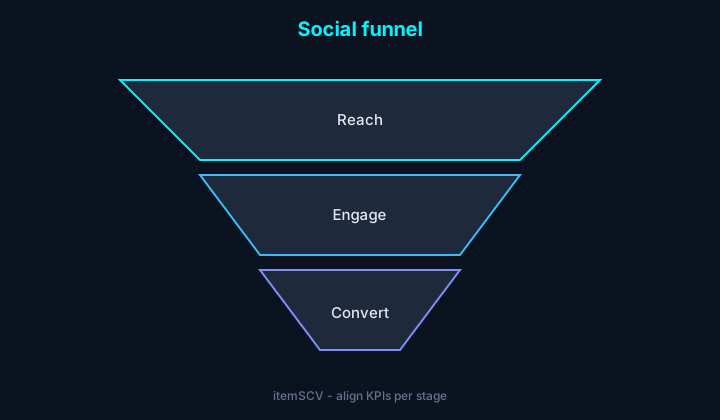
In one line: Social has different KPIs at each funnel stage (awareness → engagement → conversion). Instead of turning on every channel, focus resources on two or three places where your persona actually spends time and keep a consistent message.
| Stage | Example metrics | Operations focus |
|---|---|---|
| Awareness | Reach, impression frequency | Tone of voice · standardized UTMs |
| Engagement | Saves, comments, shares | Format experiments · community response SLA |
| Conversion | Landing pages, leads, purchases | Landing speed · minimize form fields |
Introduction: why social media marketing matters
As of 2025, more than 60% of the world’s population uses social media.
For a long time it has been a core channel where brands talk directly to customers and build awareness and relationships.
Drawing on our experience running itemSCV and client channels, we organized channel choice, content planning, community, and measurement from a practical, operations-first angle.
1. Building a social media strategy
A. Purpose and goals
Social media objectives
- Increase brand awareness
- Grow customer engagement
- Drive website traffic
- Generate and convert leads
- Provide customer service
Goal setting (SMART)
- Specific: concrete (e.g. reach 10,000 Instagram followers)
- Measurable: trackable (e.g. monthly post engagement rate above 5%)
- Achievable: realistic
- Relevant: aligned with business priorities
- Time-bound: clear deadline
Practical checklist
- Is the purpose of social media clear?
- Are goals measurable?
- Is there a strategy to hit those goals?
B. Target customers and personas
Target customer analysis
- Which social platforms your target customers use most
- How they consume content
- How they engage
Practical tips
- Research: find out which platforms your audience actually uses.
- Competitive analysis: see where competitors post and what they share.
2. Channel selection and strategy
A. Major social platforms
- Visual-first content
- Stories, Reels, long-form video
- Typical audience: 18–34, prefers visual content
- Supports many content formats
- Groups for community building
- Typical audience: 25–54, prefers information sharing
YouTube
- Video-first
- Strong for education and tutorials
- Broad age range, education-oriented viewers
- Effective for B2B
- Share expertise and industry insight
- Professionals and specialists
TikTok
- Short-form video
- Younger audiences
- Typical audience: 16–24, trend-driven
X (Twitter)
- Real-time information
- News and updates
- Users who care about timely information
Practical checklist
- Did you pick platforms your target audience actually uses?
- Can you produce content that fits each chosen platform?
- Do you have the resources to run every platform you’re considering?
Practical tips
- Focus: prefer 2–3 platforms where your audience is concentrated over “being everywhere.”
- Per-platform optimization: adapt content to each platform’s norms.
B. Content strategy by channel
- High-quality images, consistent visuals
- Stories for day-to-day; Reels for trends
- Hashtag strategy (often 10–20 relevant tags)
YouTube
- Regular uploads (e.g. 1–2 per week)
- Series to retain subscribers
- Optimize thumbnails and titles
- Professional, credible content
- Industry insight and case studies
- Drive engagement through comments and shares
Practical tips
- Content calendar: plan per platform so publishing stays consistent.
- Cross-posting: reuse ideas but reshape them for each platform.
3. Content planning and production
A. Content mix
Content types
- Educational: tips, guides, tutorials (~80%)
- Entertainment: fun content, memes (~10%)
- Promotional: product news, offers (~10%)
Content ideas
- Customer FAQs
- Industry trends
- Product usage tips
- Testimonials and case studies
- Behind the scenes, team intros
Practical checklist
- Does the content deliver value to the target audience?
- Does it match brand tone?
- Do you have enough production capacity?
Practical tips
- Idea bank: collect ideas continuously for planning sprints.
- Repurpose: turn strong pieces into new formats (blog → infographic → video).
B. Production tips
Visual
- High-quality imagery, consistent look
- Brand colors and fonts
- Templates for speed
Video
- The first ~3 seconds matter (stop the scroll)
- Add captions (works with sound off)
- Length varies by platform—optimize per channel
Copy
- Clear, concise message
- Easy scanning (bullets, emojis where appropriate)
- Include a CTA
Practical tips
- Tools: Canva, Figma, etc. for visuals.
- Templates: build reusable layouts for recurring formats.
4. Community management and engagement
A. Community management
Comments
- Fast responses (within 24 hours when possible)
- Friendly, professional tone
- Handle negative feedback constructively
Practical checklist
- Is there a process for quick replies to comments and DMs?
- Do you have community guidelines?
- Is there a crisis communication plan?
Practical tips
- Automation: auto-replies for frequent questions.
- Team rotation: share community duty across teammates.
B. Driving engagement
Tactics
- Ask questions
- Polls and surveys
- Contests and events
- User-generated content (UGC) campaigns
Practical tips
- Hashtag campaigns: reward people who post with a specific hashtag.
- Influencer collaboration: partner with creators who fit your audience.
5. Measurement and analysis
A. Key metrics (KPIs)
Awareness
- Follower count
- Reach
- Impressions
Engagement
- Likes, comments, shares
- Engagement rate
- CTR
Conversion
- Site traffic from social
- Leads generated
- Purchase conversion rate
Practical checklist
- Do you track performance per platform?
- Do you produce monthly or quarterly reports?
- Do you iterate strategy based on data?
Practical tips
- Dashboard: native analytics or third-party tools for a single view.
- Regular reviews: monthly, study hits and misses and feed the next plan.
B. Analysis and improvement
Content analysis
- Which posts perform best?
- When does engagement peak?
- Which hashtags or formats work?
Practical tips
- A/B tests: post time, hashtags, formats.
- Competitive benchmarking: learn from competitors, then differentiate.
Conclusion: sustainable social media marketing
Social media marketing rarely pays off overnight.
With a structured strategy and steady execution, you can build long-term awareness and customer relationships over time.
Keep delivering value to your target audience, stay in conversation with the community, and improve continuously using data—that’s the core.