Web3 from the ground up: from the web’s evolution to blockchain, smart contracts, and dApp development
Key takeaway
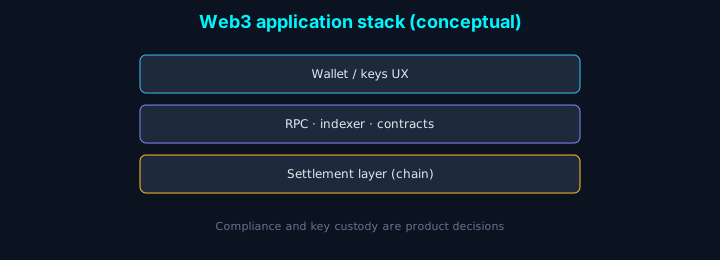
In one line: A Web3 app is one bundle of wallet UX, RPC, smart contracts, and chain settlement. Treat key custody, regulation, and gas volatility as product requirements—or production will hurt.
Evolution of the web: Web1.0 to Web3.0
Web1.0 (1990–2004): the static web
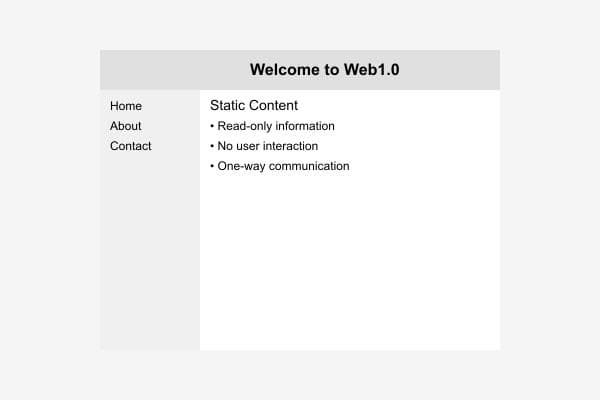 Typical static websites in the Web1.0 era
In the early 1990s the web began as a channel for one-way information. Static HTML dominated; users mostly consumed content passively. Sites resembled brochures moved online—companies broadcast; users read. Email was almost the only interactive channel.
Web2.0 (2004–present): interaction and platforms
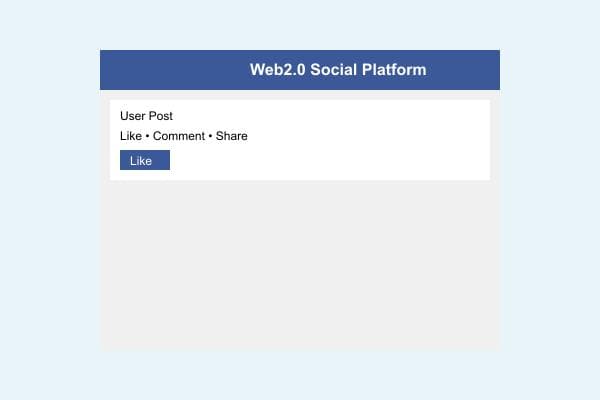 Representative social platforms of the Web2.0 era
By the mid-2000s the web shifted. AJAX made pages dynamic; users became creators, not just consumers. Social networks accelerated the change—Facebook, Twitter, and peers let people share thoughts and experiences. Mobile and cloud made services available anywhere, anytime.
Web3.0 (present–future): decentralization
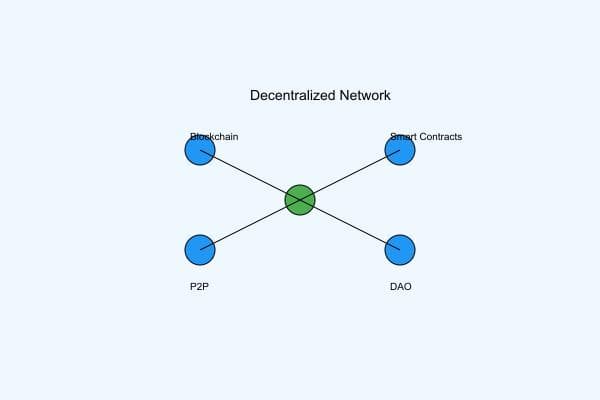 Decentralized network structure in the Web3.0 era
We are at another inflection. With blockchains, the web moves toward decentralization: less dependence on a single server, more peer-to-peer interaction. Users can truly own their data; token economies enable new value exchange. DeFi, NFTs, and DAOs push digital self-sovereignty further.
Web3 core technology and practice
Introduction
Web3 is not only a tech upgrade—it assumes values like decentralization, transparency, and security. After experimenting with chains and smart contracts, we needed a clear view of what is production-ready; this guide collects that shift and how to build on it.
Core shifts in Web3
The biggest change is decentralization: instead of one server owning data and services, distributed networks enable direct P2P interaction. That is not just plumbing—it returns ownership and control to users.
Transparency: on-chain transactions are verifiable; smart contract code is often public, unlike opaque legacy systems.
Security: cryptography and immutability support integrity; distributed storage reduces single-point compromise risk.
Autonomy: DAOs can coordinate without a single command center; smart contracts automate governance workflows.
1. Core Web3 technology
1.1 Blockchain basics
A blockchain is Web3’s foundation—not only storage, but a way to establish trust. Each block links to the previous hash; consensus lets participants agree on validity.
Basic block structure:
Consensus families include PoW (Bitcoin-style work), PoS (Ethereum-style stake), DPoS (elected validators), and PoA (trusted validators).
Smart contracts run on-chain as automated agreements. Token standards like ERC-20 are canonical examples:
1.2 The Web3 stack
Frontend: Web3.js or Ethers.js to talk to chains; MetaMask or WalletConnect for wallets; React or Next.js for UI.
Backend: Node.js or Python services; IPFS/Filecoin for decentralized storage; The Graph for indexed queries.
Infrastructure: pick a chain (e.g. Ethereum, Polygon); node providers like Infura or Alchemy; OpenZeppelin for safer contracts.
2. dApp development in practice
2.1 Environment setup
Hardhat compiles, tests, and deploys Ethereum contracts. Balance security and speed when you configure it.
Keep RPC URLs and keys in environment variables—never in source:
2.2 Smart contract development
NFT contracts manage unique digital assets—IDs and metadata—for art, games, real estate tokenization, and more:
DeFi contracts automate finance. A staking pattern lets users deposit tokens and earn rewards:
2.3 Frontend integration
Wallet connection defines UX. Users sign transactions and call contracts through the provider:
Handle submission, confirmation, and errors with clear feedback:
3. Security and optimization
3.1 Smart contract security
Vulnerabilities like reentrancy can drain funds. Use guards and audited math patterns:
Reviews, audits, and tests are not optional—high coverage and external review catch classes of bugs automation misses.
3.2 Gas optimization
Gas is a first-class product constraint. Storage is expensive: fewer state variables, struct packing where it helps. Computation: fewer loops and external calls. Events can replace some state writes when subscribers only need a log trail.
4. Where Web3 may go
4.1 Technical direction
Layer 2 (Optimistic and ZK rollups) targets throughput and cost. Cross-chain bridges and messaging shrink silos. Sharding, parallelism, and storage compression remain active research and engineering areas.
4.2 Industry outlook
Finance: DEXs, lending, insurance, and derivatives keep evolving.
Games: play-to-earn and NFT items change asset ownership; metaverse tie-ins broaden experiences.
Social: decentralized social graphs, community governance, tokenized rewards for creators.
Supply chain: provenance and automation via transparent, append-only records and smart settlement.
4.3 Societal impact
Expect sharper debate on data ownership and consent. DAOs may redistribute governance. Token economies can align creators and communities—sustainable models are still an open design problem.
4.4 Challenges
Scale and UX for mainstream users. Regulation (KYC/AML, privacy) vs decentralization. Inclusion and environmental footprint of consensus mechanisms. Ethics and education remain gaps as tooling matures.
5. Practical checklists
5.1 Before development
- Requirements and threat model
- Chain / L2 selection
- Architecture sketch
- Security requirements
- Gas budget estimate
5.2 During development
- Code review
- Test coverage targets
- Gas profiling
- Security review or audit plan
- Documentation
5.3 Before mainnet
- Testnet deploy and soak
- Contract audit (if applicable)
- Frontend QA
- Monitoring and alerting
- Backup and recovery plan
6. FAQ
How should I start Web3 development?
Learn Solidity basics and how chains and contracts execute. Set up Hardhat or Truffle, deploy a tiny contract to a testnet, then wire a minimal frontend to read and send transactions. Small end-to-end loops beat reading only.
How do I secure smart contracts?
Start from audited libraries (e.g. OpenZeppelin). Run static analysis (Slither, Mythril). Plan external audits for value at risk. Follow patterns for reentrancy, access control, and overflow (Solidity 0.8+ helps, but logic bugs remain).
How do I optimize gas?
Minimize storage writes and pack structs. Reduce loops and external calls. Prefer events where state can be reconstructed off-chain. Profile with real calldata.
How do I improve dApp UX?
Smooth wallet connect flows, show tx status and estimated fees, handle errors with human-readable copy, and optimize mobile—most users are on phones.
What’s next for Web3?
Layer 2 adoption, better cross-chain UX, continued DeFi and NFT experimentation, and DAO tooling—all while regulation and infrastructure mature.
What are the main challenges?
Scalability without centralizing trust, usable onboarding, security at scale, legal clarity, and sustainable economics and energy use.
What about Web3 developers’ careers?
Demand grows for smart contract engineers, security specialists, cross-chain integrators, and UX for crypto-native flows—plus compliance-aware builders as products meet real-world rules.